With so many different wedding dress styles to choose from, knowing where to start can feel overwhelming.
Here’s our guide to the most popular wedding dress silhouettes, how they work on the body, and how to find a style that suits you.
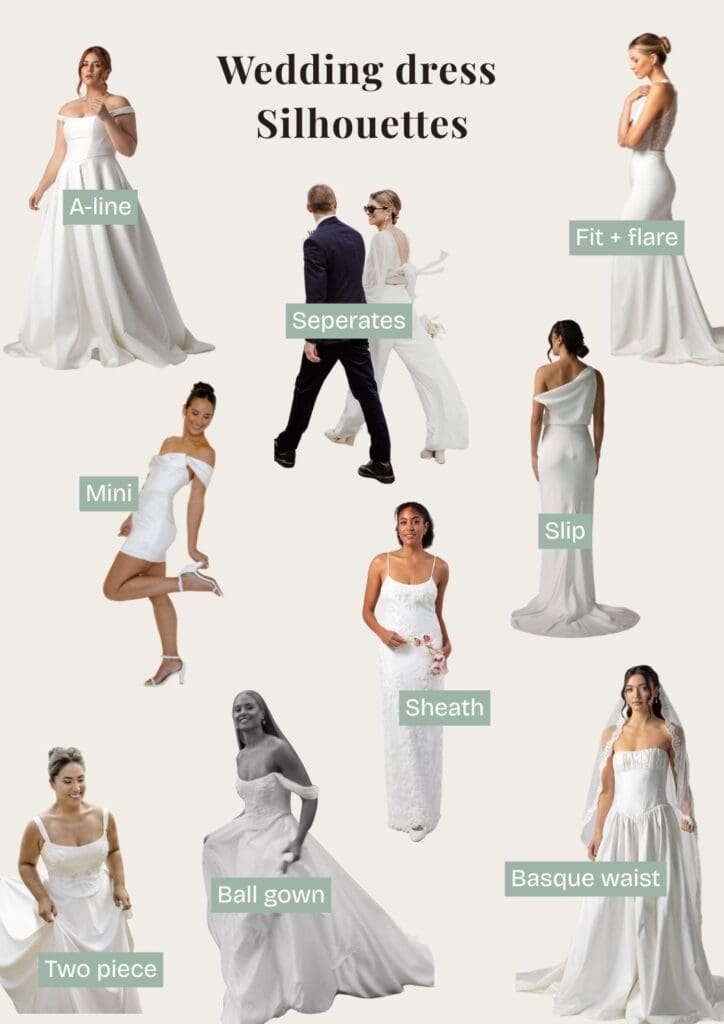
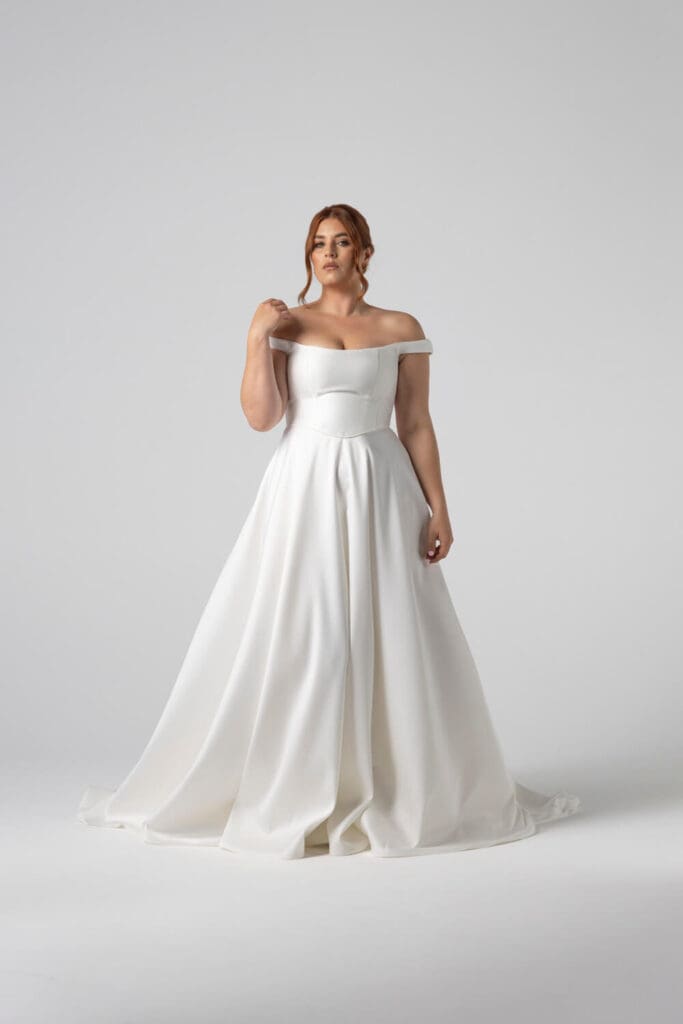
An A-line wedding dress is fitted through the bodice and waist before gradually widening into an A-shaped skirt.
It’s one of the most versatile wedding dress silhouettes and works beautifully across different body shapes. The defined waist creates shape, while the skirt falls softly over the hips without feeling overly full.
For a more modern take on an A-line, look for a structured bodice, beautiful fabric or an unexpected neckline.
A fitted or fit-and-flare wedding dress follows the body through the bodice, waist and hips before gradually widening through the skirt.
It’s a beautiful choice if you want to show your shape without the more dramatic flare of a traditional mermaid gown. Where the skirt begins to flare can also make a surprisingly big difference to the overall proportions of the dress.
A drop-waist wedding dress extends the bodice below the natural waist before flowing into the skirt. A Basque waist creates a similar elongated shape but dips into a V or U at the front.
Both styles can create a beautifully defined waist and a longer line through the torso. They’re particularly striking with a structured bodice and fuller skirt.

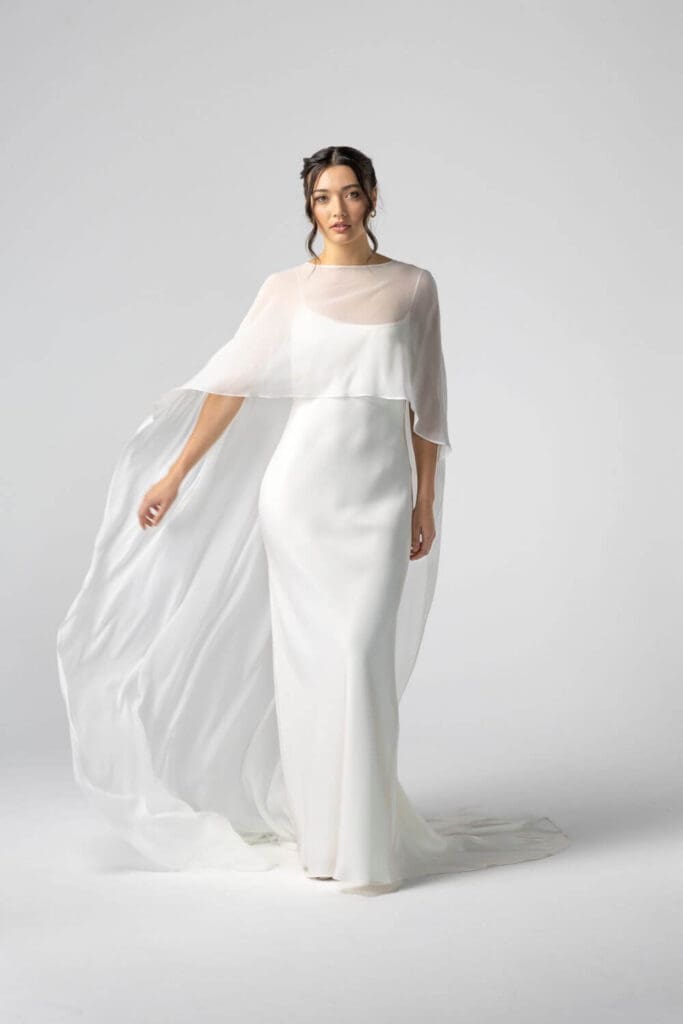
Sheath and column gowns have a straighter silhouette, sitting relatively close to the body and falling towards the floor without a dramatically flared skirt.
These silhouettes work particularly well for brides drawn to simple and minimal wedding dresses.
With fewer design details, the quality of the fabric, cut and construction becomes especially important. When a gown is simple, beautiful construction and fit are what make it feel special.
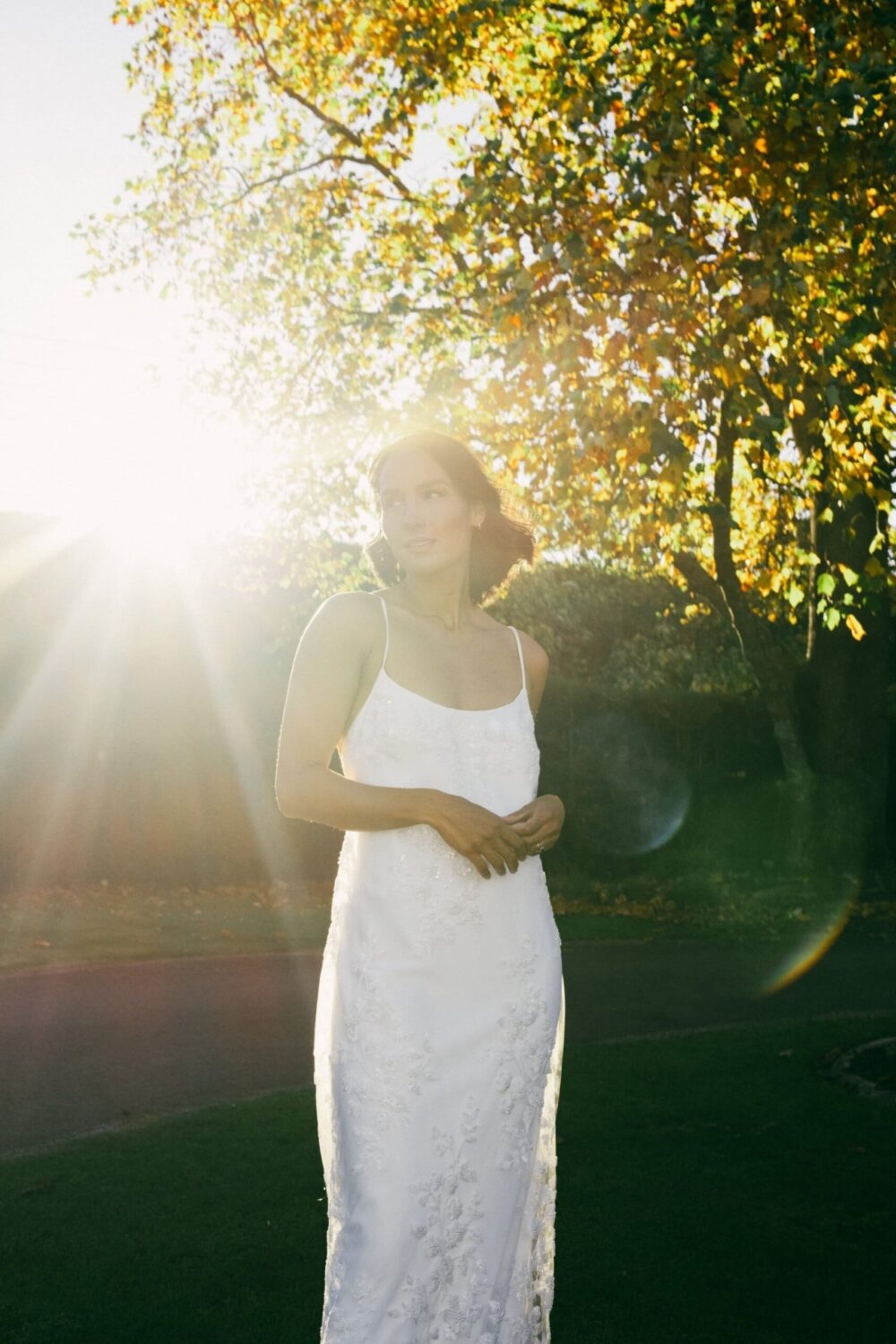
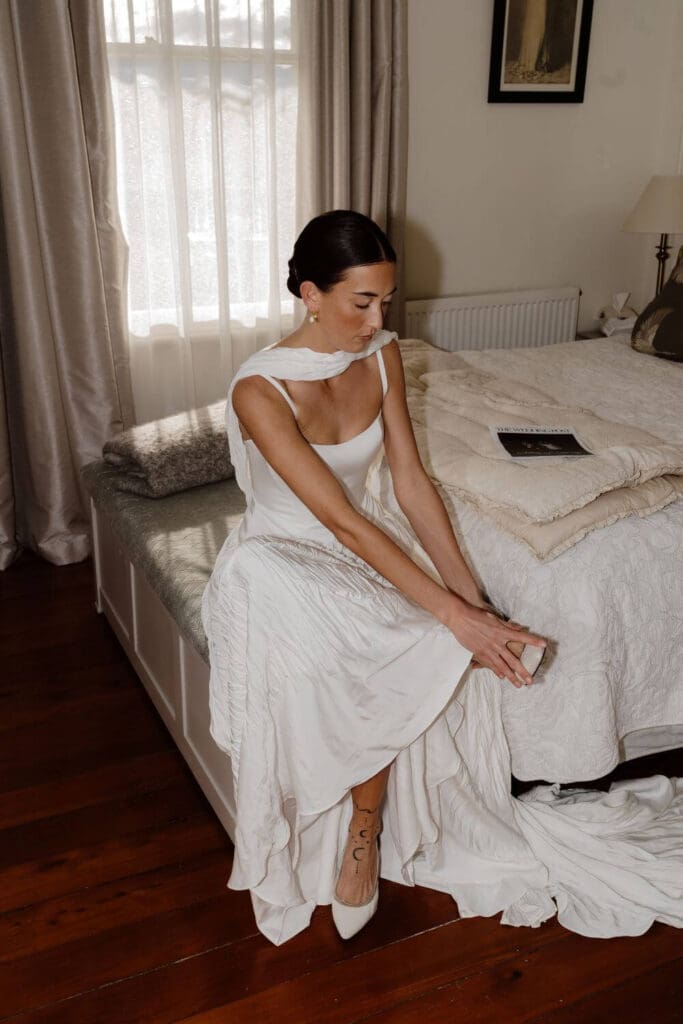
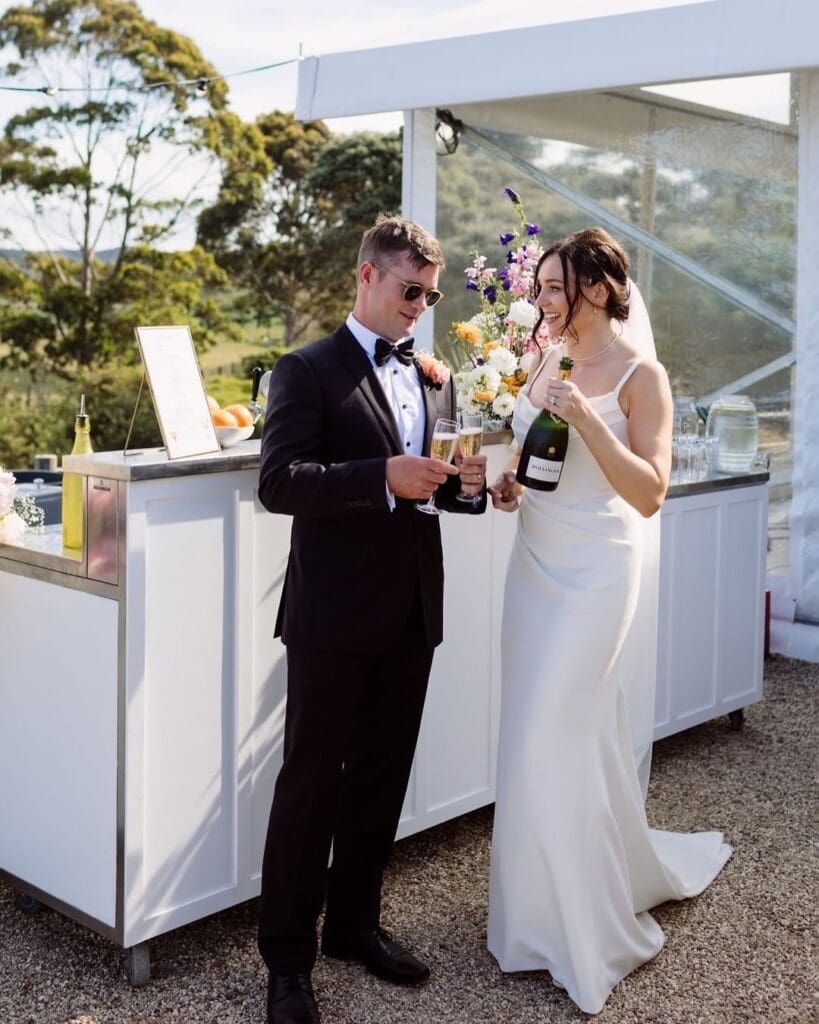
A slip wedding dress is softer and less structured, designed to skim the body rather than sculpt it.
Silk satin and crepe work beautifully for this silhouette because they move naturally with the body. Slips are an effortless option for relaxed weddings, destination weddings or brides who value comfort and simplicity.
They can also be styled with a detailed top, veil or bridal scarf to add another element while keeping the gown itself beautifully understated.
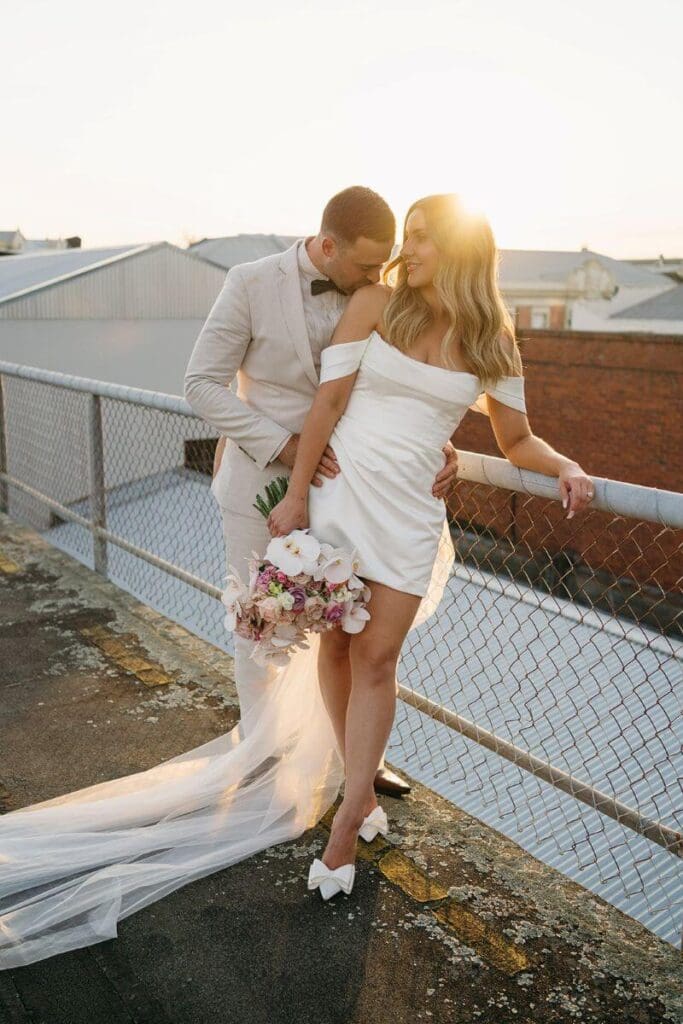
A mini wedding dress can be a modern alternative to a traditional gown or a second look for later in the wedding day.
They’re particularly suited to elopements, registry weddings and relaxed celebrations, while a beautiful veil or bridal scarf can make a mini feel distinctly bridal.
Bridal separates allow you to combine a top with a skirt or trousers to create your own silhouette.
They’re a great option if you want something less traditional or would like to change your look between the ceremony and reception. Separates also give you the freedom to combine different fabrics, shapes and levels of coverage to create something more personal.
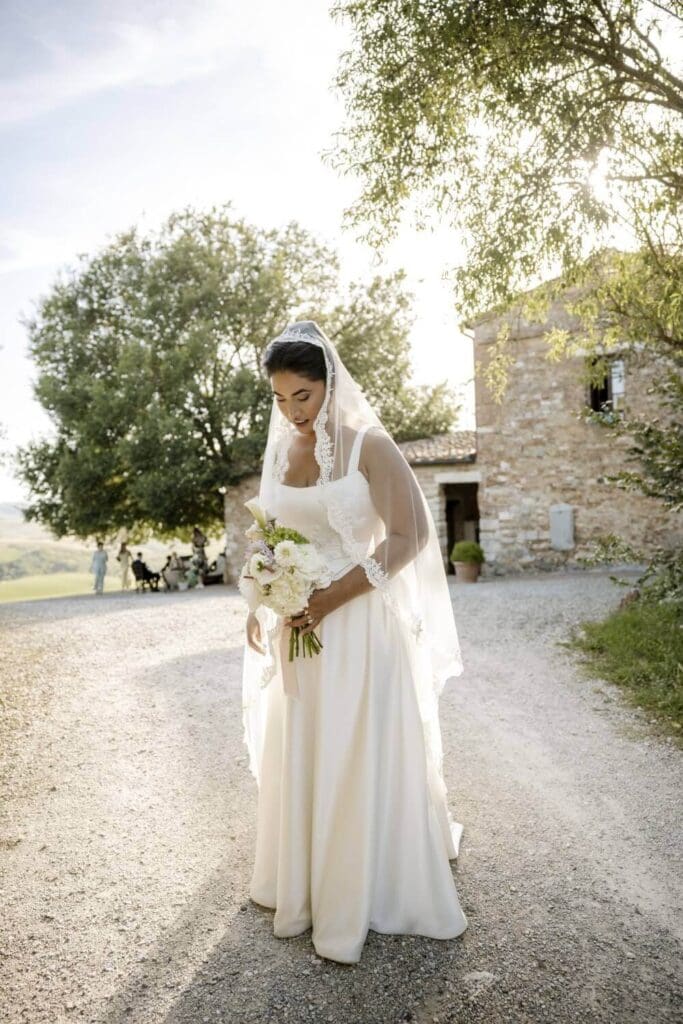
Body shape can give you a useful starting point, but we don’t believe there is a wedding dress silhouette you should or shouldn’t wear.
Instead, think about which parts of your shape you’d like to emphasise, the proportions you’d like to create and, most importantly, how you want to feel in your gown.
Lucky you — hourglass figures tend to look amazing in almost anything!
Fitted and fit-and-flare wedding dresses are beautiful for highlighting natural curves and a defined waist, while structured A-line gowns can emphasise the waist before flowing softly over the hips.
Basque and drop waists can also look incredible on an hourglass shape, drawing attention to the waist and creating a beautifully defined silhouette.
Ultimately, this is a body shape where we’d encourage you to try everything and see which style feels most like you.
An A-line gown is a great place to start. It defines the waist before falling softly over the hips, creating beautifully balanced proportions.
A fuller skirt can create a similar effect and is a good option if you’d like to emphasise a smaller waist.
But you certainly don’t need to hide your hips. If you love your curves, try something fitted or fit-and-flare too. A-line, fuller-skirt and fit-and-flare silhouettes are commonly recommended starting points for this shape.
An off-the-shoulder wedding dress can work beautifully on broader shoulders. The line created across the neckline can help balance the shoulders and create a softer, more hourglass silhouette.
You can also look for styles that add a little more volume through the lower half of the body. An A-line or fuller skirt can balance your proportions, while a defined waist helps create shape through the centre.
Don’t overlook necklines and straps when trying gowns — they can change the proportions of a dress just as much as the skirt.
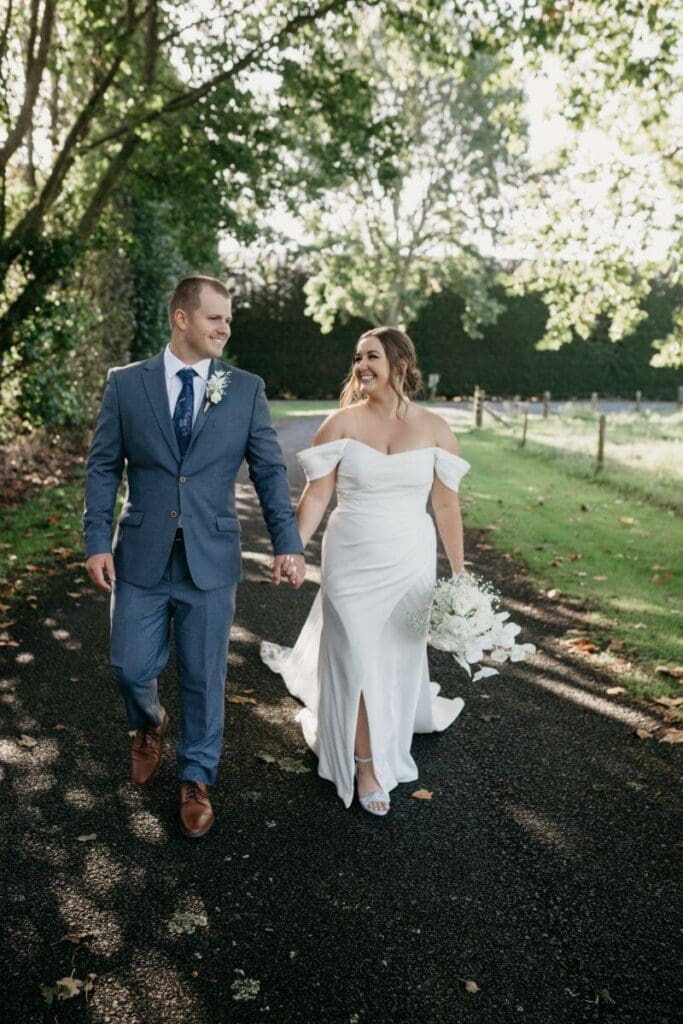
Look for wedding dresses that create definition through the waist.
A waist seam paired with an A-line or fuller skirt is one of our favourite combinations for a straighter figure. Defining the waist and adding volume below it creates more contrast between the waist and hips, giving the illusion of a more hourglass silhouette.
Structured bodices, panelling and Basque waists can also help define the waist.
Alternatively, you don’t have to create curves at all. If you love your natural shape, a clean sheath, column or slip gown can look incredibly elegant.
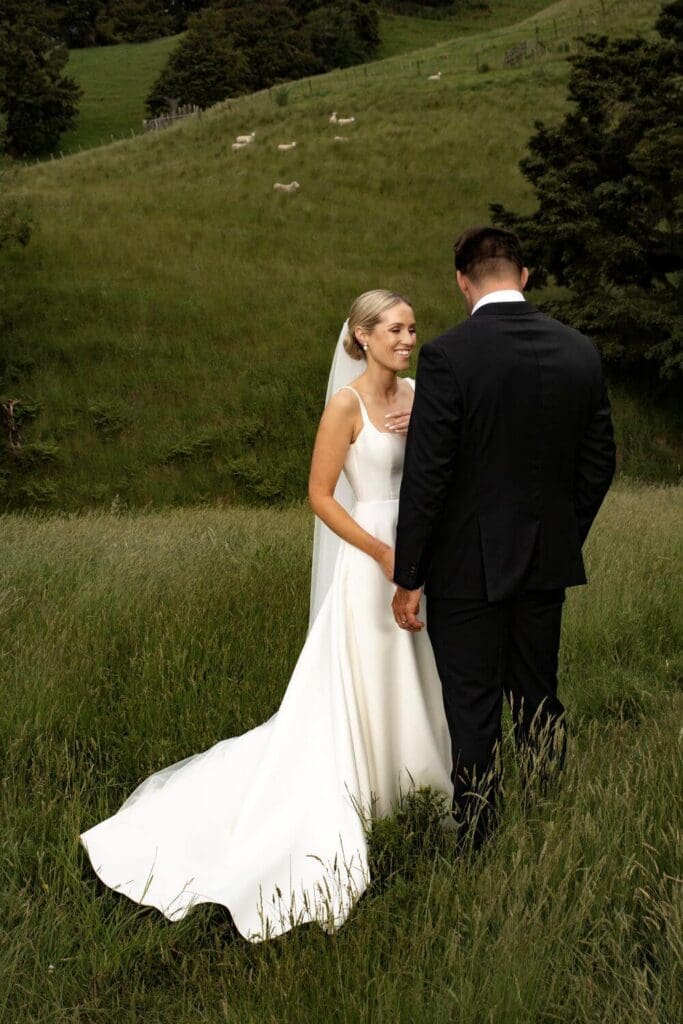
Proportion is particularly important.
A-line, sheath, column and fitted silhouettes are all good places to start. Look at where the waist sits, the length of the bodice and how much volume there is in the skirt.
Too much fabric can sometimes overwhelm a smaller frame, whereas clean lines and well-positioned seams can help create length.
Most importantly, don’t judge a gown solely by how the sample fits. A dress altered or made to your proportions can look completely different. Petite-focused body-shape guidance similarly highlights A-line, column/sheath and fit-and-flare silhouettes as useful starting points.
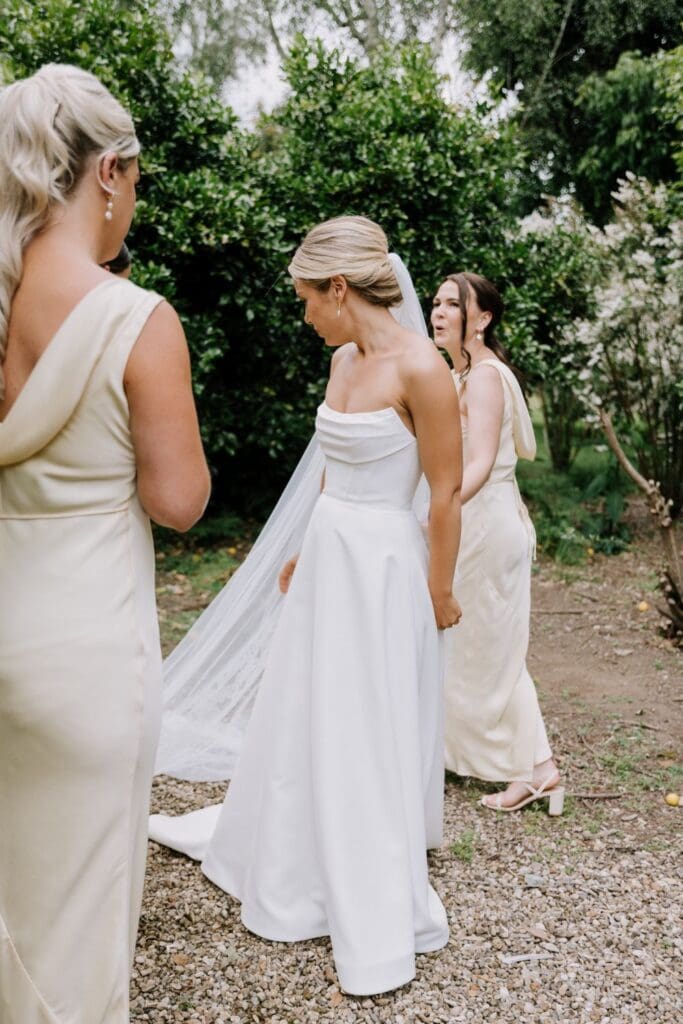
There isn’t one silhouette that’s best for a particular dress size.
Instead, consider your proportions and the areas you’d like to define. A structured or corseted bodice can provide support and create a beautiful waist, while A-line and fit-and-flare skirts offer two very different ways of working with curves.
We find that fit and construction are particularly important. A well-structured gown fitted correctly to your measurements can feel completely different from a sample that’s simply too small or too large.
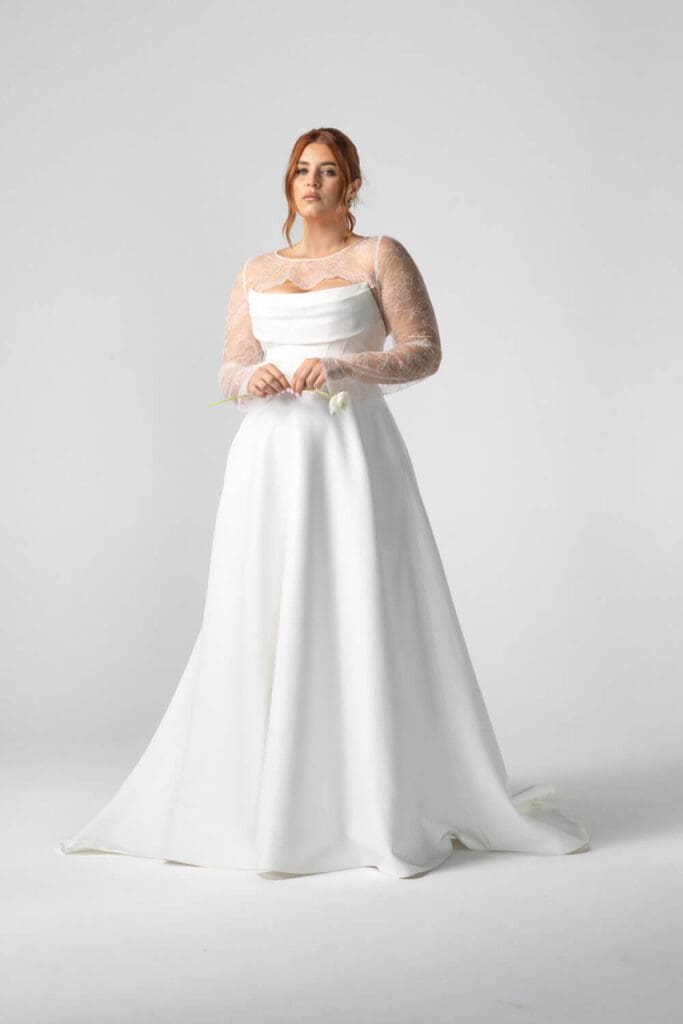
You don’t need to know before you start trying dresses on.
Images are a brilliant way to work out what you’re drawn to, so save the gowns you love and look for common themes. You might notice that you repeatedly choose defined waists, simple fabrics, fuller skirts, low backs or a particular neckline.
Then try them on.
Don’t be afraid to try a silhouette you hadn’t considered. Bridal designers interviewed by Vogue similarly recommend approaching the process with an open mind and trying different styles rather than only what you expect will work.
Think about:
The goal isn’t to find the wedding dress you’re supposed to wear for your body shape. Use these suggestions as a starting point, then find the silhouette that makes you feel your best.
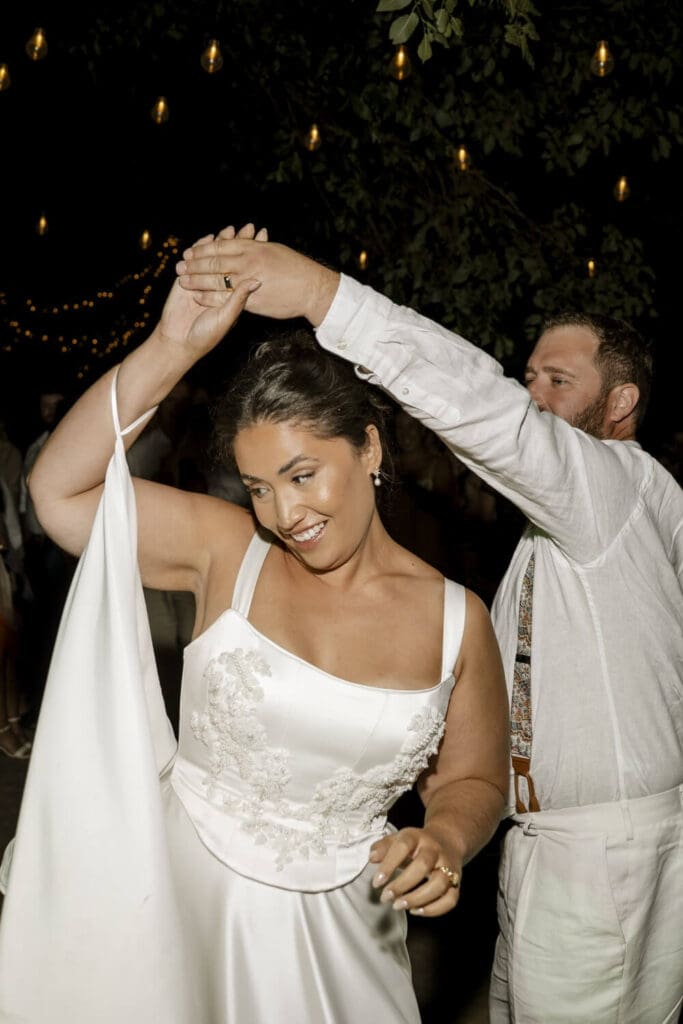
A-line is often considered one of the most versatile wedding dress silhouettes because it defines the waist and falls softly over the hips.
But there isn’t one silhouette that’s most flattering for everyone. The proportions of the gown, its structure and how well it fits you can be just as important as the silhouette itself.
Hourglass figures can wear almost anything. Fitted and fit-and-flare gowns highlight natural curves, while structured A-lines, drop waists and Basque waists can all beautifully emphasise a defined waist. Traditional body-shape guides similarly identify fitted and A-line shapes as strong options for hourglass proportions.
A-line, sheath, column and fit-and-flare gowns can all work beautifully on petite brides.
Pay particular attention to proportion — including the length of the bodice, position of the waist and volume of the skirt — rather than focusing only on the silhouette.
Off-the-shoulder styles can work beautifully with broader shoulders and help create balanced proportions. You can also try an A-line or fuller skirt to add volume through the lower half of the body.
No. Understanding your proportions can give you a starting point, but trying different silhouettes is the best way to discover what you actually like on your body.
Go into your appointment with an open mind — the gown you love might not be the one you expected.
The best way to discover your wedding dress style is to explore different silhouettes and then experience them on.
From modern silk gowns and structured silhouettes to simple wedding dresses and bridal separates, discover the designs our brides are loving.
Or book a bridal appointment at our Mount Maunganui studio for one-on-one help finding your gown.
Can’t easily visit us? Our Try At Home service lets you try selected Gown + Altar wedding dresses from home.