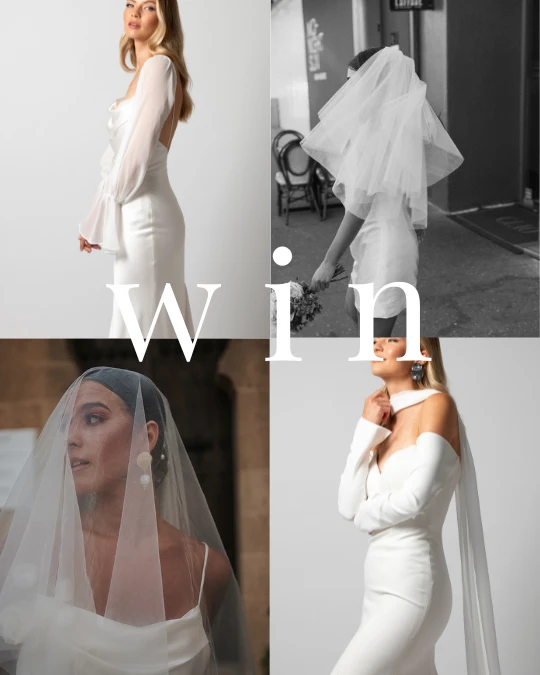
The fabric of your wedding dress shapes how it looks, moves and feels. Silk is loved for its beautiful finishes, but it can create very different bridal looks, from a fluid crepe gown to a full skirt with crisp texture.
At Gown & Altar, we work with different silks to bring each design to life. Here’s how to recognise their differences and find the finish that feels right for you.
Silk Bridal Bow @eilishburtphotography
Why Choose a Silk Wedding Dress?
Silk is a natural fibre that can be woven into many different fabrics. Some are smooth and lustrous, while others are matte, sheer or textured.
That variety is part of its appeal. You can choose silk for a simple gown with gentle movement, a structured silhouette or a light layer that adds softness.
Silk can also feel lovely against the skin. The comfort of the finished dress will depend on its fabric weight, lining and construction, so trying it on is the best way to understand how it feels.
Five Silk Fabrics and How They Differ
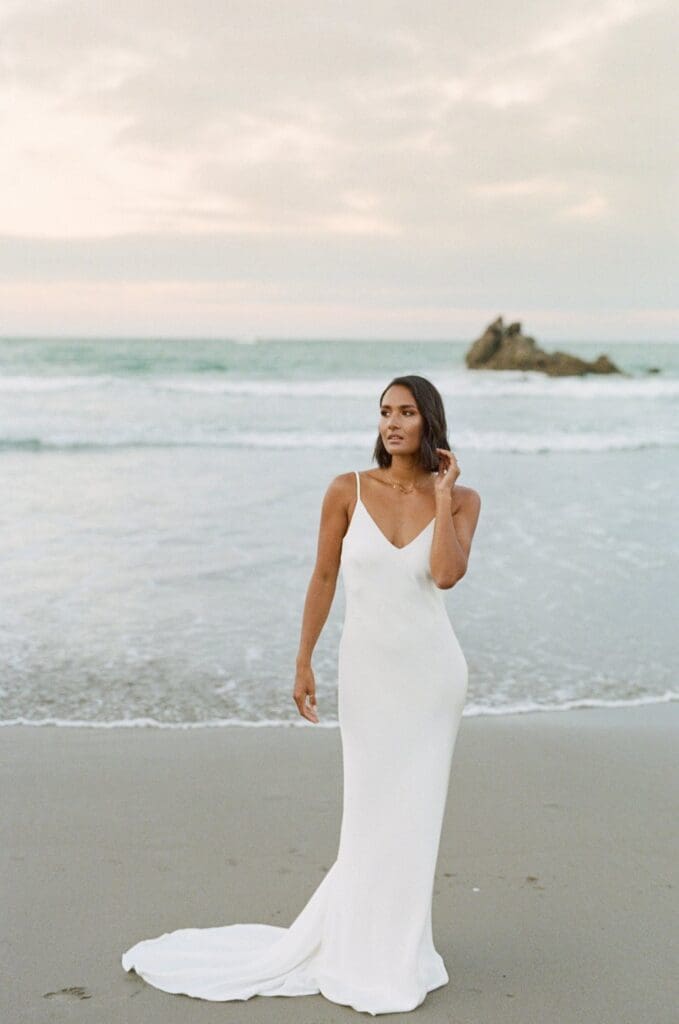
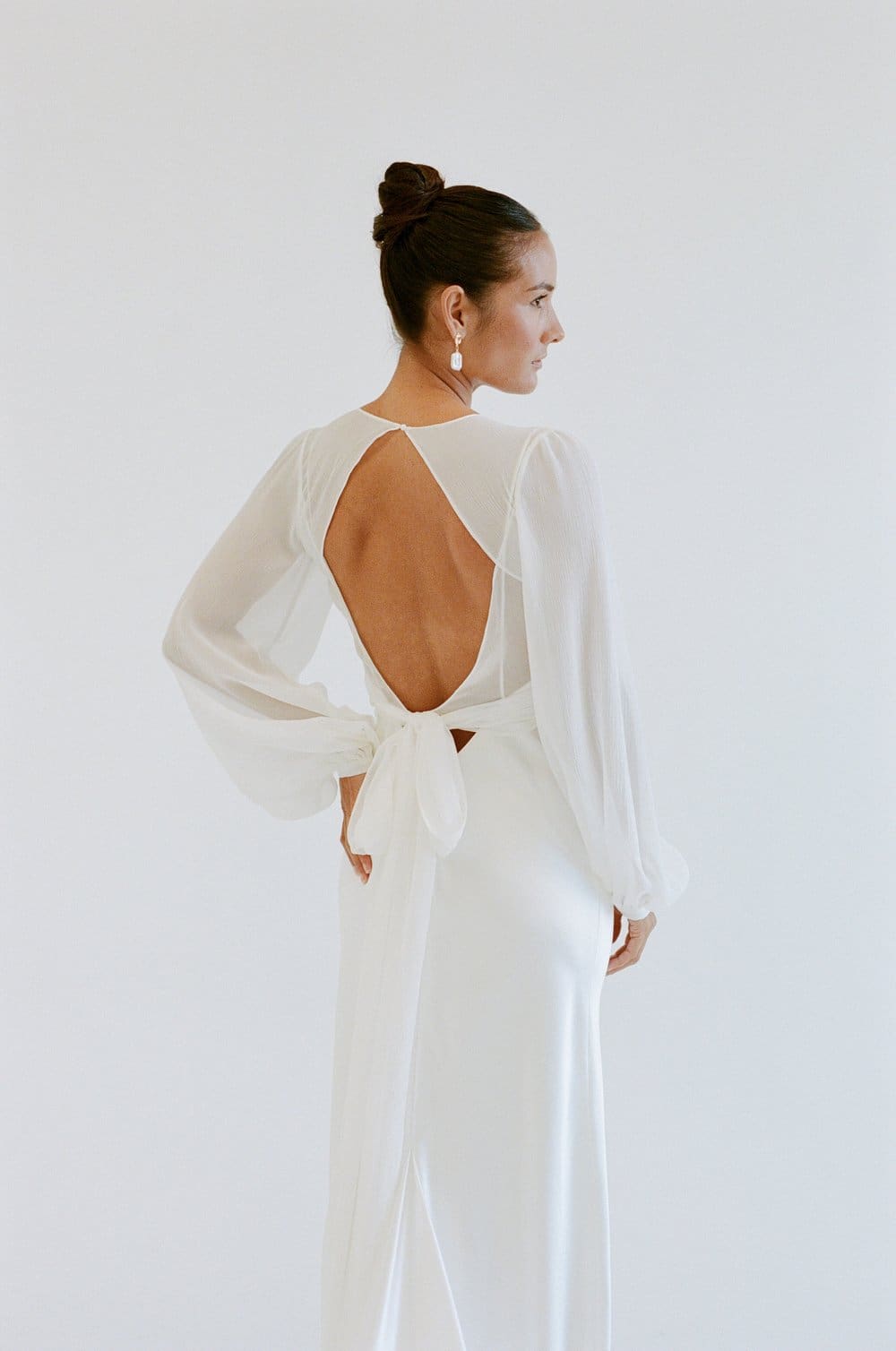
Silk Crepe: Soft, Fluid Movement
Silk crepe has a subtly textured surface and a softer finish than glossy satin. It drapes beautifully, making it a lovely choice for brides drawn to clean lines and gentle movement.
The weight of the crepe matters. At Gown & Altar we use 40 momme silk crepe for its rich weight, buttery softness and good coverage. It drapes beautifully over the body, while lighter silk crepe can be more revealing and less forgiving.
Our Grace Gown is an example of silk crepe in the Gown & Altar collection. It’s a good place to start if you prefer understated texture over a high-shine finish.
Silk Crepe Wedding Dress : Grace Gown
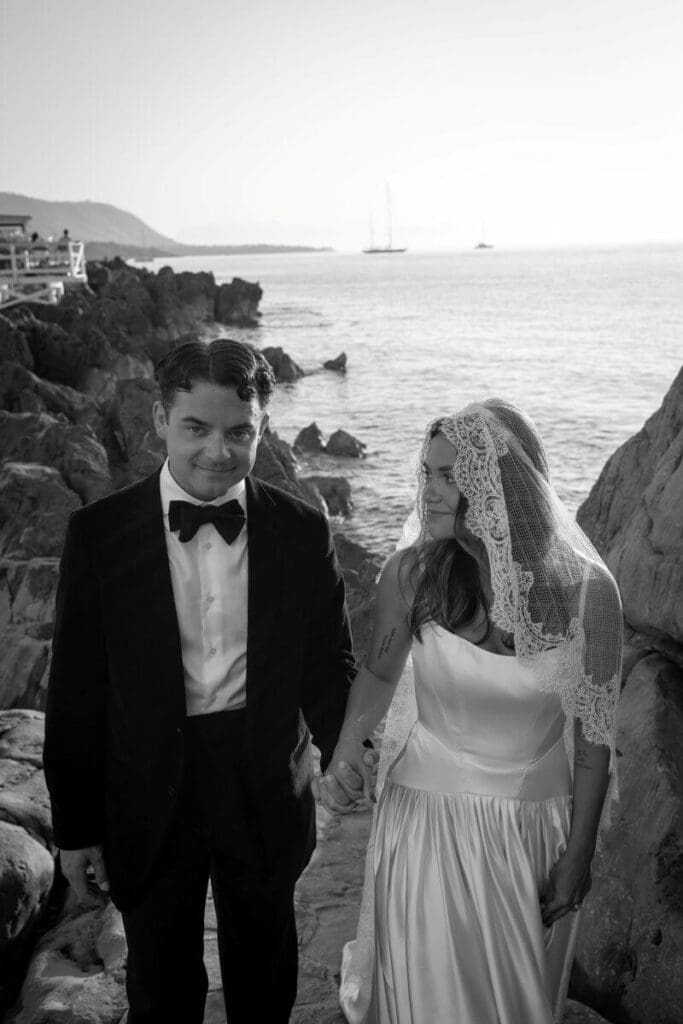
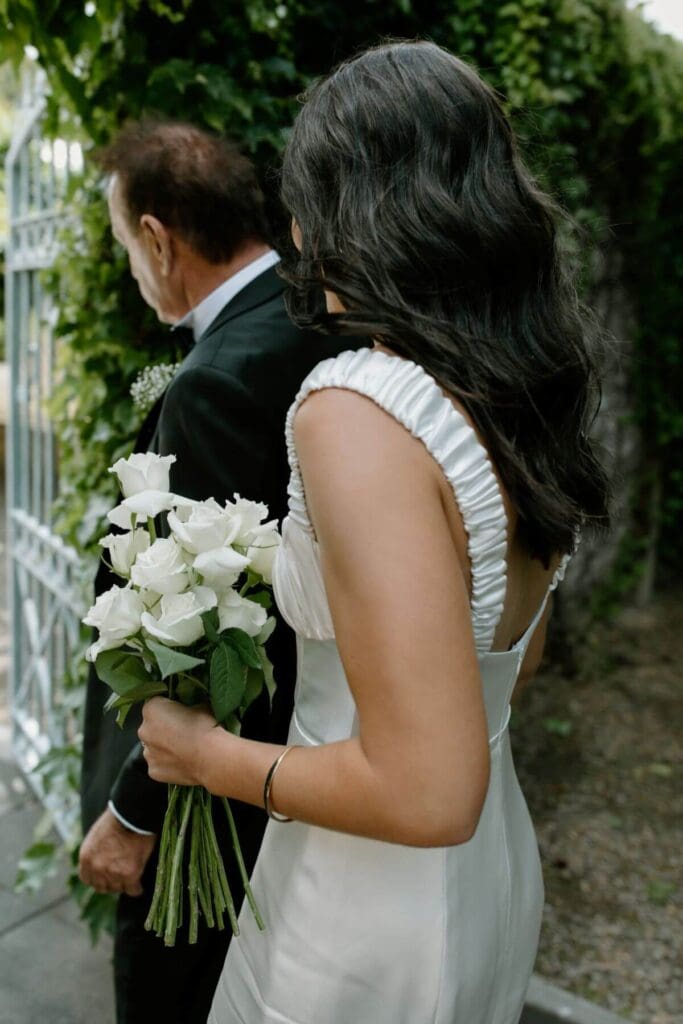
Silk Satin: Smooth With a Beautiful Sheen
Silk satin has a smooth surface that catches the light. Its lustre brings depth to a gown, highlighting folds, draping and the shape of the design.
It comes in different weights, so a silk satin dress can feel fluid or more structured.
Our Ophelia Gown shows how silk satin can complement a statement silhouette. The fabric’s sheen highlights its basque waist and creates a beautiful play of light across the gown.
Real bride Victoria wearing the Silk Satin Ophelia Gown
Silk Dupion: Crisp With Natural Texture
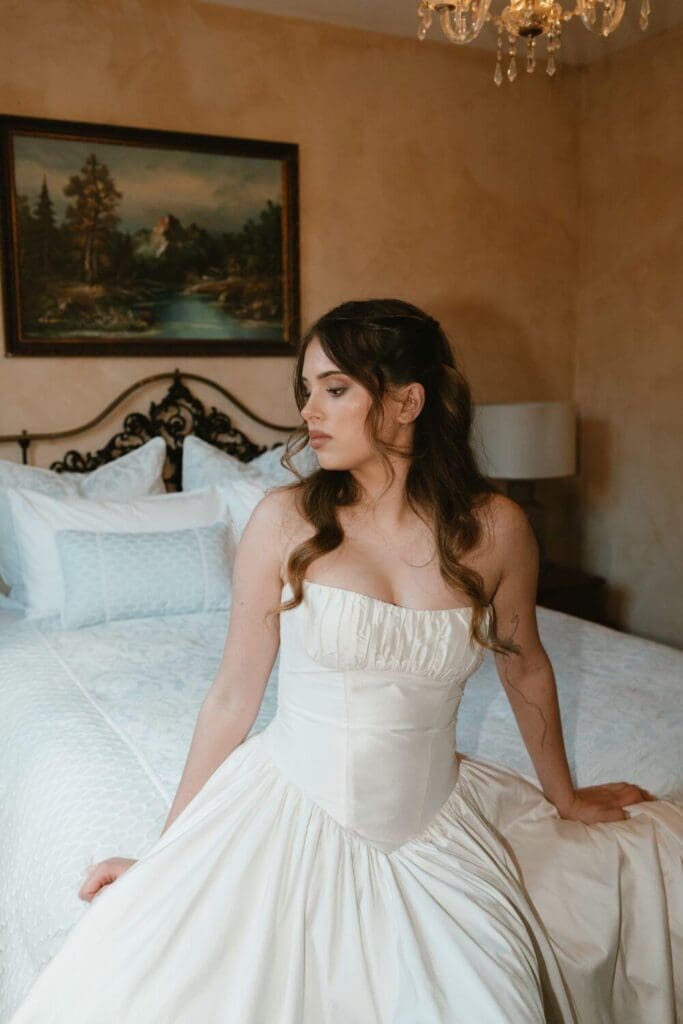
Silk dupion has a crisp feel and characteristic slubs, the small irregularities in the yarn that give its surface texture.
It has more body than softer, flowing silks, making it well suited to designs where shape and volume are part of the look.
Our Davis Gown is silk dupion. It’s a beautiful choice if you love a structured gown with a little drama and a nod to Princess Diana’s iconic 1980s wedding dress. The silk’s natural texture gives it an organic finish, while its crispness creates volume without weight.
Silk Dupion Wedding Dress : The Davis Gown. Photo @dot.agency.nz
Crinkle Silk Chiffon: Sheer With Gentle Texture
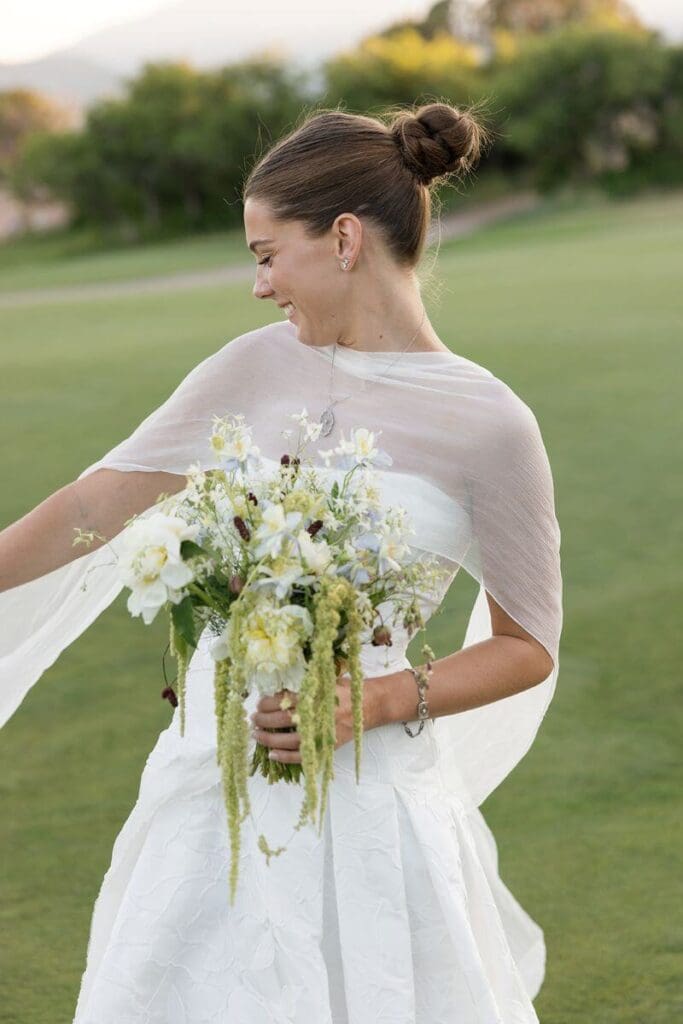
Crinkle is a textured finish applied to silk chiffon, giving this lightweight, sheer fabric a softly rippled surface and delicate movement.
Our Long Silk Bridal Scarf adds a floaty layer around your neck or shoulders, while our Soleil Top shows how the same fabric can bring soft texture and an airy feel to a bridal garment.
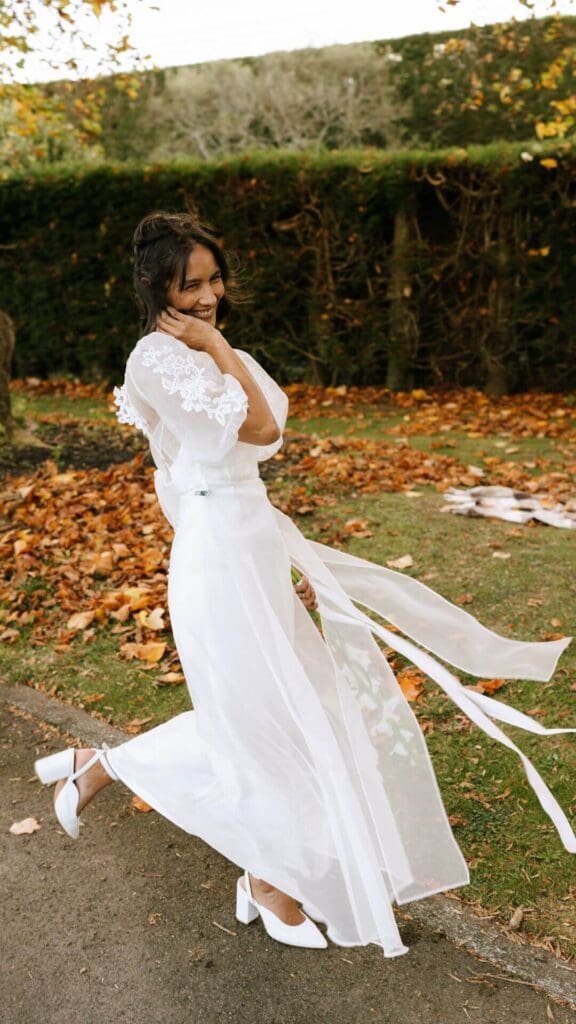
Silk organza is lightweight and sheer, with a crispness that helps it hold shape. It can create volume in sleeves, skirts and overlays while keeping an airy appearance.
If you love soft transparency but want a little more definition, organza is a beautiful option.
Our Lovely Dress features silk organza, showing how a sheer fabric can become a defining part of a bridal design.
Real Bride wearing the Lovely Dress @shelbyellisphotography
Silk vs Satin: What’s the Difference?
Silk and satin describe different things.
Silk is a fibre. Satin is a weave. Satin can be made from silk, polyester or other fibres.
A silk satin wedding dress combines silk fibres with a satin weave. Other silk dresses might be made from crepe, dupion or organza and have a completely different finish.
When choosing your gown, ask about both the fabric’s composition and its construction. The word “satin” alone doesn’t tell you what it is made from.
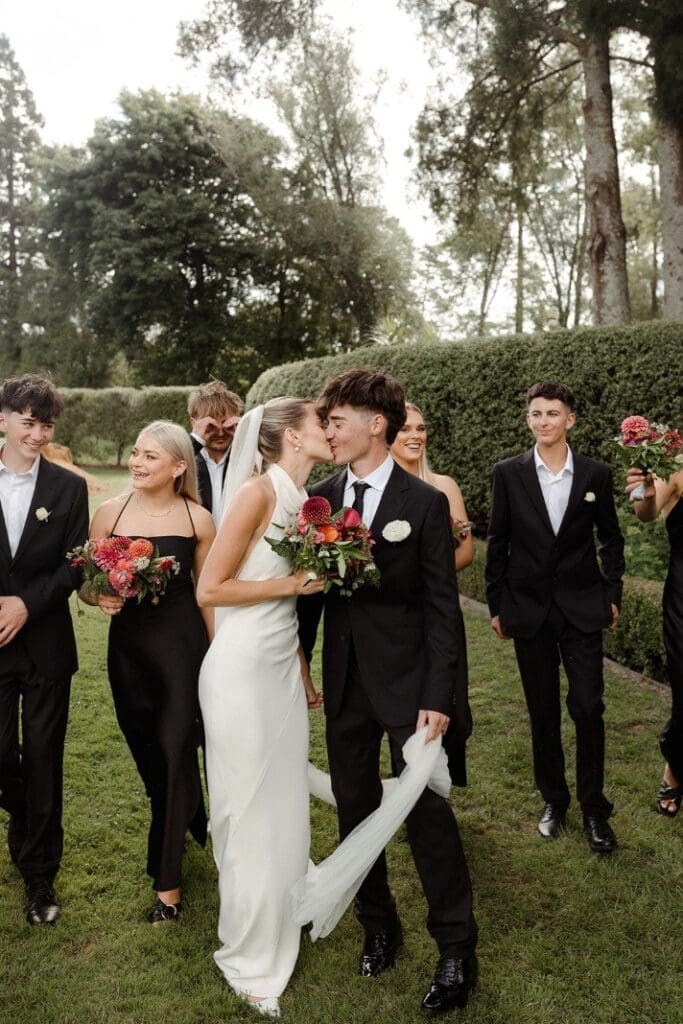
Kate custom silk satin gown @bec.hodgson.photography
How to Choose the Right Silk for Your Wedding Dress
Start with how you want your dress to look and feel.
For gentle drape and a quieter finish: explore silk crepe.
For a smooth surface with sheen: consider silk satin.
For crisp texture and shape: try silk dupion.
For a sheer accessory with soft movement: look at crinkle silk.
For light volume and transparency: explore silk organza.
Try sitting, walking and moving in your favourite gowns. Notice how the fabric falls, how the lining feels and whether you enjoy wearing it.
Once you’ve chosen your dress, accessories can help bring the look together. Our guide to choosing a wedding veil is a useful next step.
FAQs About Silk Wedding Dresses
Does a silk wedding dress crease?
Yes, silk can crease, although how noticeably depends on the weave, weight and finish. When transporting your gown, lay it flat across the back seat where possible to minimise folding.
Once you arrive, hang it high in its garment bag. Open the bottom of the bag and spread the train onto a clean sheet to help prevent wrinkles.
If it needs touching up, professional pressing or steaming is best. If pressing at home is suitable for your gown, use a low heat setting and a clean, white pressing cloth between the iron and the silk.
Is silk suitable for a summer wedding?
Yes. Silk is naturally breathable and absorbs moisture, making it a lovely choice for warmer weather. Lightweight silks feel soft and airy against your skin.
For the most comfortable summer gown, choose fewer layers and a breathable lining so you can move easily throughout the day.
Why can silk wedding dresses cost more?
Silk production and fabric quality contribute to the price. Some silks also require careful cutting, sewing and finishing.
The final cost of a gown reflects its design and the work involved, as well as the fabric.
How should I care for a silk wedding dress?
We recommend taking your gown to a dry cleaner experienced in silk bridalwear as soon as possible after your wedding, giving them the best chance of removing stains. Point out any marks and delicate details, and follow the care advice supplied with your gown.
Avoid experimenting with stain treatments or washing methods at home. Read our gown care guide for more tips on handling, cleaning and storing your dress.
Can I try Gown & Altar gowns before ordering?
Yes. You can visit our Mount Maunganui studio to compare fabrics and try your favourite designs.
If you can’t visit, our Try At Home service offers selected samples in New Zealand and Australia, with virtual support available to help you explore the fit and styling.
Silk Organza Melody Gown
Find the Silk Bridal Look That Feels Like You
From fluid crepe to crisp dupion and sheer organza, each silk brings something different to a wedding dress.
Discover why the Anderson Gown has remained a favourite among modern brides. Crafted from luxurious silk crepe with an elegant high neckline and low back, this timeless wedding dress combines effortless movement with understated luxury. Explore real bride inspiration, styling tips and discover if Anderson is the one for you.